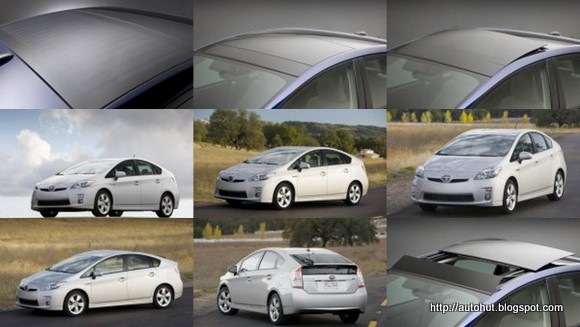
The highly anticipated 2010 Toyota Prius Hybrid is being revealed at the North American International Auto Show in Detroit. The new Prius is expected to make it to Toyota dealerships by late spring in the U.S. and Japan at the same time.
The new 2010 Toyota Prius will have even better gas mileage than the outgoing model while being bigger and more quite. Wow, how can you make this thing quieter? Hmm, that’s Toyota for you.
The new Prius is also expected to have one of the lowest drag-coefficient at 0.25Cd of any production vehicle as we know today. That aids in getting better gas mileage beating out the previous 41mpg figure to accomplish a combined 50mpg!!! Toyota took a stab back at Ford’s Fusion Hybrid in a MPG battle and Ford is bleeding, BAD.


Press Release
Toyota Reveals All-New Prius
DETROIT, Jan. 12 /PRNewswire/ — Toyota Motor Sales (TMS), U.S.A., Inc., unveiled the all-new 50-mile-per gallon rated third-generation Prius hybrid vehicle today at the 2009 North American International Auto show.
Celebrated as the benchmark for cars of the future, the Prius has delivered superior fuel economy and ultra-low emissions to more than one million owners worldwide for more than 10 years.
The midsize third-generation 2010 Prius will offer even better mileage ratings, enhanced performance, and innovative design features. It will be quieter, roomier, and equipped with advanced standard and available features such as a moonroof with solar panels, four driving modes, Intelligent Parking Assist (IPA) and steering wheel touch controls that display on the instrument panel.
An Eco-Icon
The first-generation Prius entered the market in 1997 as the world’s first mass-produced hybrid. The name Prius, “to go before” in Latin, became symbolic of a car that was launched even before environmental awareness had become a mainstream social issue.
From the beginning, Toyota’s full-hybrid system was developed in-house and has become a driving force behind advanced vehicle technology. The company’s exclusive Hybrid Synergy Drive System was introduced in 2004 on the second-generation Prius. Since then, more than 670,000 have been sold in the U.S.
In designing the new, third-generation Prius, Toyota engineers combined a careful refinement of existing systems with an aggressive measure of new technology necessary for the future of automobiles.
Fuel Economy and Environmental Performance
The new Prius will be built using processes that reduce pollution in every stage of vehicle life, from production and driving, through to disposal.
The third-generation Prius extends its record of continuous improvement in fuel economy. The first-generation Prius, which was rated 41 EPA combined mpg, was replaced by the current model, which is EPA rated at 46 mpg, combined city/highway. Using a combination of technologies, fuel efficiency was increased to an estimated 50 miles per gallon for the new Prius.
A larger and more powerful 1.8-liter Atkinson-cycle, four-cylinder engine will power the new Prius. Contrary to conventional wisdom, the larger engine actually helps improve highway mileage. By making more torque, the new engine can run at lower average rpm on the highway. When operating at lower rpm, the new engine uses less fuel. Mileage is especially improved in cold-start conditions and at higher speeds.
Use of an electric water pump and a new exhaust gas recirculation (EGR) system also contribute to the engine’s efficiency. The 1.8-liter Prius engine is the first Toyota power plant that requires no belts under the hood for better fuel economy and less potential maintenance.
A multi-information display panel that monitors fuel and energy consumption is standard. It provides feedback on the Prius’ efficiency using three different displays to help the driver acquire economical driving habits.
Unlike most other hybrid vehicles available, Prius has been a “full” hybrid since introduction. This allows it to run on engine alone, battery alone, or a combination of both. The system blends the best of parallel hybrid and series hybrid designs to achieve the ability to operate on the electric mode alone, and to charge the batteries while the car is running.
The patented Hybrid Synergy Drive system in the 2010 Prius is 90 percent
newly-developed with significant improvements over previous models.
The transaxle is lighter in weight and reduces torque losses by as much as 20 percent compared to the previous model. The inverter, which converts direct current to alternating current, has a new direct cooling system to reduce size and weight.Taken together, the inverter, motor and transaxle are smaller and 20 percent lighter. A newly developed electronically controlled regenerative braking system has been adopted, with control logic optimized to enhance regeneration.
The new Prius will offer three alternative driving modes. EV-Drive Mode allows driving on battery power alone at low speeds for about a mile, if conditions permit. There is also a Power Mode, which increases sensitivity to throttle input for a sportier feel, and an Eco Mode, which helps the driver achieve their best mileage.
Cutting Edge Styling
In designing the new Prius, aerodynamic performance was an important factor.
The goal was to create a beautiful silhouette, while not compromising function. Designers preserved the dynamic triangle form of the current model–instantly recognizable as a Prius–but made alterations to the overall profile, pillar position and angle. The front pillar, extended forward, helps refine the performance-focusing, shaped form.
The overall height of the Prius is the same, but the roof profile is altered by moving the top of the roof 3.9 inches to the rear. This emphasizes the wedge shape, and also allows for enhanced rear headroom and improved aerodynamics.
The design of the new Prius’ front and rear corners are sharp, sporty and aerodynamic. Strong side character lines, rising from front to rear, define the glazed geometric shape. Viewed from the rear, wider rear treads provide a solid, firmly rooted stance.
Dimensionally, the new Prius has the same wheelbase as the current generation. Overall length is slightly increased by 0.6 inches, in part by moving the front cowl forward.
World’s Lowest Cd
The new Prius received more wind tunnel hours of testing than any other Toyota in history, resulting in the cleanest aerodynamic profile of any mass-produced vehicle in the world. By focusing on the shape of the body, underfloor, wheelhouse liner and shape of the wheels, the designers of the new Prius were able to reduce the coefficient of drag (Cd) value to 0.25, compared to 0.26 for the previous model. The airflow under the car was studied extensively. Engineers made changes to the shape of the fender liner, front surface of the underfloor, and added a fin at the rear floor cover to increase linear stability.
Advanced Equipment For a New Era
An available sliding glass moonroof is packaged with solar panels, located over the rear seating area, that power a new ventilation system. This solar powered ventilation system uses an electrically powered air circulation fan that does not require engine assist. The system prevents the interior air temperature from rising while the vehicle is parked, making the cool-down time shorter when the driver returns to the vehicle, thus reducing the use of air conditioning.
The remote air-conditioning system is the first system in the world to function on battery-power alone and that can be remotely operated, so the driver can adjust the interior temperature for comfort before getting in the car.
Reducing the vehicle’s power consumption, available LED (light emitting
diode) lamps are used for low beams and also in the tail and stop lamps. Air conditioning, a major energy drain, has been re-engineered to increase efficiency and cool-down performance. In addition, an exhaust heat recirculation system reduces heat waste by warming engine coolant during cold startup, for improved performance. It also heats up the passenger cabin more efficiently.
Enhanced Vehicle Performance
The next-generation Prius is built on a new platform, which enables improved handling stability, quieter operation, and collision safety. The suspension consists of front struts and a rear intermediate beam design, as before, but handling stability is advanced by improving the stabilizer layout, higher caster angle and tuning the bushing characteristics. Disc brakes are now used on all four corners, replacing the front disc/rear drum brakes in the current model.
Weight was saved through use of aluminum in the hood, rear hatch, front suspension axle and brake caliper and super high-tensile steel in the rocker inner, center pillar, and roof reinforcement. To meet customer expectations for everyday performance, zero-to-60 acceleration has been improved to 9.8 seconds, more than a second faster, in internal testing.
Better-performing sound insulation, working with improved vibration damping, has been installed in various locations to reduce road noise.
Functional Interior Is Bigger on the Inside
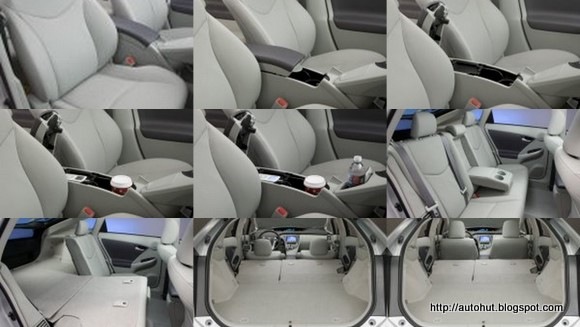
Proving that small changes add up to big gains, the cargo area of the new Prius was expanded 0.4 inches in length and 2.2 inches in width by using a new and an improved layout of the battery cooling unit.
Rear seat legroom is enhanced by a new space-saving contoured front-seat design.
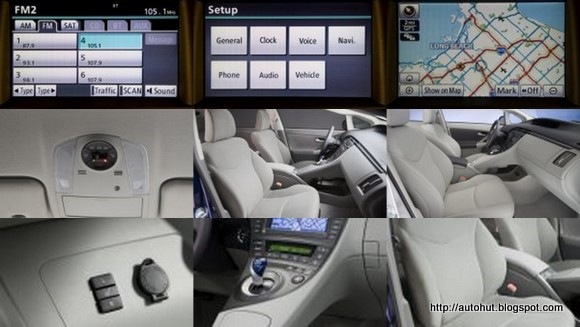
Viewed from the cockpit, the center cluster smoothly flows from the instrument panel to the console. Handy storage space has been added under the shift lever by taking advantage of the shift-by-wire system. Simple, fin-type air vents are consistent with the cabin’s efficient appearance. Judicious use of silver accents adds a finished, technical feel.
Touch sensors on the steering wheel switches are designed to reduce driver eye movement for better concentration on the road. When the driver touches the audio or info switch located on the steering wheel, a duplicate image is displayed on the instrument panel, directly in front of the driver. This system, called Touch Tracer, is the first system in the world to allow steering wheel controls to read out on the instrument panel.
The ECO indicator on the Multi-Informational Display (MID) provides driver feedback for lower fuel consumption.
In pursuit of developing various advanced technologies aimed at realizing sustainable mobility, Toyota will use plant-derived, carbon-neutral plastics in the 2010 Prius. The newly-developed plastics, known as “ecological plastic,” will be used in the seat cushion foam, cowl side trim, inner and outer scuff plates, and deck trim cover. Ecological plastic emits less CO2 during a product lifecycle (from manufacturing to disposal) than plastic made solely from petroleum; it also helps reduce petroleum use.
Safety Enhancements
The new Prius was designed to comply with class-top level collision safety performance in each global region of sale, and to accommodate increasingly strict safety requirements in the future.
In addition to advanced driver and front passenger Supplemental Restraint System (SRS) airbags front and rear side curtain airbags, driver and passenger seat-mounted side airbags and driver’s knee airbag are standard equipment.
Active headrests are used in both front seats to reduce the possibility of whiplash in a collision. Anti-lock Brake System (ABS), Electronic Brake Distribution (EBD), Brake Assist (BA), electronic traction control (TRAC) and Vehicle Stability Control (VSC) are included with Toyota’s standard Star Safety System.
Dynamic Radar Cruise Control system, using advanced millimeter wave radar, is an available option. The system also enables Lane Keep Assist, which helps the driver stay safely within the lane, and the Pre-Collision System, which retracts seatbelts and applies the brakes in certain conditions when a crash is unavoidable.
Next-generation Intelligent Parking Assist features simplified settings to help guide the car into parking spaces.
A backup monitor, which provides a view of rear obstacles when reverse is engaged, is available with an optional voice-activated navigation system.
Safety Connect, Toyota’s first safety and security service, includes automatic collision notification, stolen vehicle locator and an SOS call button. Safety Connect will be available a few months after launch.
The development of the Prius has required applications for over 1,000 patents filed across the world, of which 292 are U.S. applications.
Pricing for the 2010 Prius will be announced shortly before it goes on sale late spring.
Public Web site: http://www.toyota.com
2010 PRUIS PRELIMINARY SPECIFICATIONS
POWERTRAIN
1.8-liter four-cylinder engine with VVT-i
Engine horsepower: 98 hp @ 5,200 rpm
Engine torque: 105 lb-ft @ 4,000 rpm
Electric motor: Permanent magnet synchronous motor
Electric motor power output: 80 hp/153 lb-ft torque
Hybrid system net horsepower: 134 hp
Emission rating: SULEV (with AT-PZEV)
Electronically controlled continuously variable transmission
Drive System: Front-wheel-drive
Hybrid battery pack: Nickel-metal hydride
Estimated fuel economy: 50 mpg (combined)*
DIMENSIONS (inches)
Overall Length: 175.6
Overall Width: 68.7
Overall Height: 58.7
Wheelbase: 106.3
Ground clearance: 5.5
Coefficient of Drag: 0.25
Wheels: 15-inch alloy wheels
17-inch alloy wheels (optional)
Tire Size: 15-inch: 195/65R15
17-inch: 215/45R17 (optional)
Seating Capacity: 5
EPA class rating: Midsize
* Preliminary figure based on Toyota’s internal testing. Actual mileage will vary.


 A comprehensive re-engineering of Toyota's Hybrid Synergy Drive system brings significant reductions in weight and size, contributing to the overall improvements in fuel economy and emissions. Further weight saving gains have been achieved through more extensive use of lightweight aluminum and ultra high-tensile steel in new Prius's construction.
  The interior has also undergone a comprehensive redesign, promising to offer improved ergonomics. In terms of space, changes to the roof profile improve rear seat headroom while revisions to packaging of the Hybrid Synergy Drive system allow for more space in the boot. Rear seat legroom is also enhanced by a new space-saving contoured front-seat design.